
Because I Can Touch Bottom
Elders provide perspective, youth provide movement, and small communities transfer knowledge

Summary
When the river begins to run fast, the elders who remember the last flood are the ones who know where to find the rocks so the youth can be led to safety. Humans have faced catastrophe before, and I’m optimistic because human systems have solved instability before. We can apply lessons-learned to expedite recovery, magnifying the beneficial halo by making enterprising use of modern innovations as the old world passes away to make room for the new.
Youth have energy; age has perspective
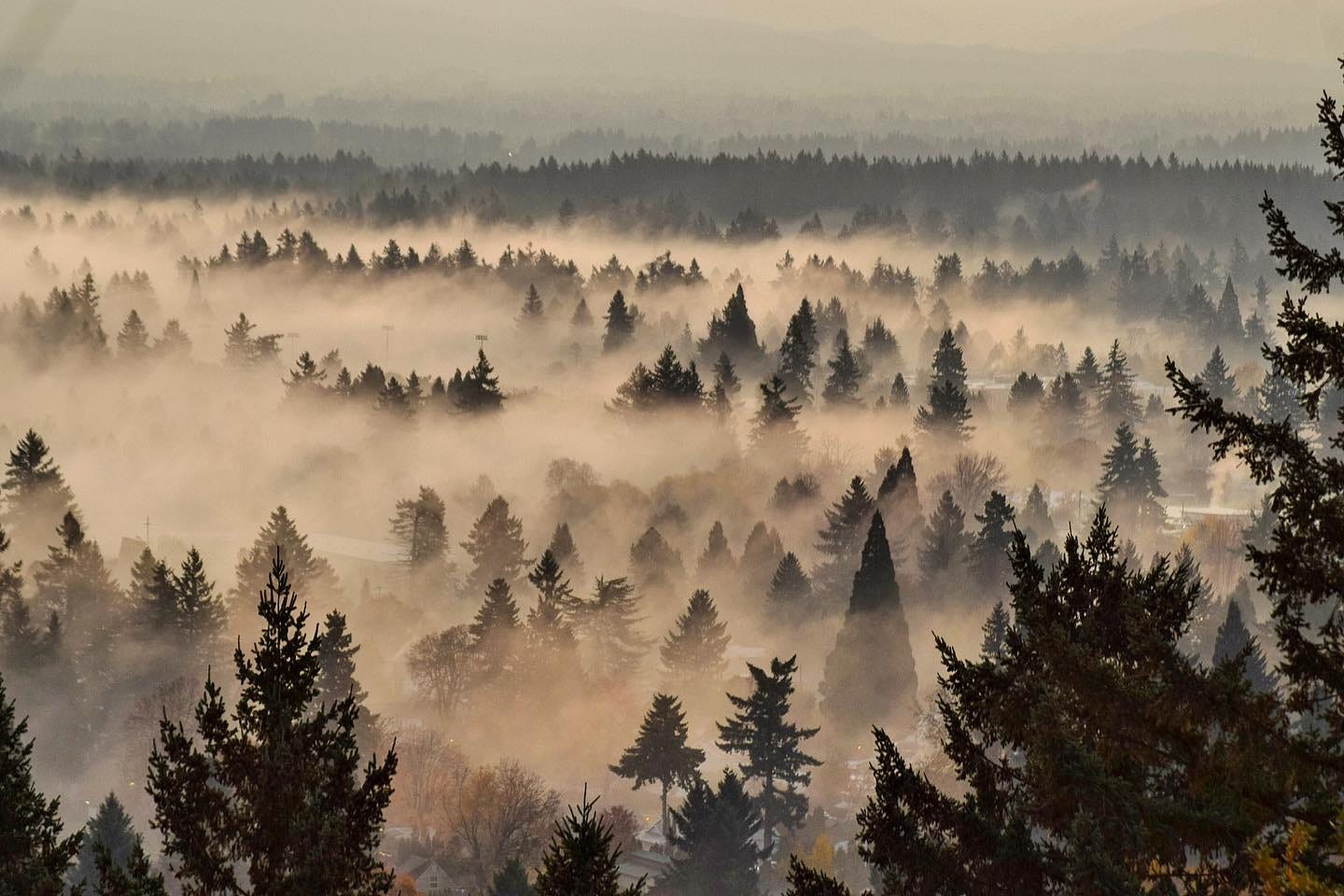
When my boys were young, (and we still lived in Oregon), they would periodically ask me how I knew that things were going to be ok. I told them that I was standing at the top of the ridge while they were just a little bit below me on the trail.
The metaphor landed because we spent a lot of time in the forest.
From where I stood, I could see farther across the valley than they, which meant I could see something they couldn’t yet see: the path ahead was going to be just fine.
It’s surreal being a half step or two ahead of the crowd
People are getting anxious while I’m getting optimistic, and I’m feeling bullish because I’ve invested the past ten years preparing for now and what’s to come.
But as each day passes, I come to value the youth’s energy as I meditate upon how to offer them the benefit of lived experiences, for I cannot force what I’ve learned upon them; I was raised in a world that no longer exists, and the world that is becoming is increasingly strange to me.
And when my girls were little I taught them how to swim at the base of a small waterfall, here in Austin. They’d occasionally ask why I wasn’t scared, because from where they were treading water the current felt powerful and unpredictable.
I told them, “It’s because I can touch bottom.”
From where I was standing, I knew they were going to be ok; even though they couldn’t quite see it yet.
They’d say “aren’t you scared?” and I’d answer “no, the water here is only five feet deep, and you’re not that tall….yet, but you will be.”
Those two examples are a little bit how the present moment feels to me, for my sons needed to trust me enough to scale the ridge under their own steam, and my daughters needed to trust me enough to learn how to swim on their own.
Having invested a decade preparing for now, it’s easy for me to see how we’re going to be ok. The table has been set and the meal is being prepared for the feast that’s to come.
Preparing the table for a bountiful feast
The infrastructure is built, tested, and ready. The partners are in place. The model is proven and well-supported by academic literature, which I’ve generously shared across many of my articles for the past several years.
And no, it’s not crypto. Stop that.
A lot of folks can’t see it because they’re still looking backwards, trying to force emergent patterns into outdated top-down models from which they hope to derive personal benefit.
In the following article I talk about how nonprofit efforts can magnify their “halos” by doing what all private-sector companies do: adopting contingency plans designed to ensure operational continuity when Plan A dries up.
The craziest thing is that most people simply cannot see the wealth that flows around their ankles. Absolute self-imposed insanity.
We’re talking about $7–10 trillion of commerce that simply falls off the ledger; roughly 20–30% of U.S. GDP. The informal economy expands every time the formal economy gets weird, which makes the blindness to it a major policy failure.
I first noticed this gap 25 years ago during the dot-com recession. It baffled me then, and it still does today: policymakers simply ignore trillions of dollars in transactions happening right under their noses.
Then again, maybe that blindness is why so few people have thought about how to retool existing systems to sustain copy-and-paste deployments of community wealth models by the hundreds of thousands.
But I have.
And in fact, we have.
It feels good to know we’re going to be ok.
From 8 to 80: the science of why multi-generational community collaboration is most effective
Are you ready for this? It’s amazing.
Human beings cooperate most effectively in surprisingly small clusters, and anthropologists have long observed that while people can maintain loose familiarity with large groups, the number of relationships we can track deeply, eg: who needs help, who is reliable, who has tools, who is struggling, is far smaller.
The British anthropologist Robin Dunbar described this in his work on social cognition, noting that human societies naturally form nested layers of cooperation, with the innermost circle often consisting of roughly five intimate relationships, followed by progressively larger rings of coordination and identity (Dunbar, Grooming, Gossip, and the Evolution of Language, 1996; Dunbar, Human Evolution, 2014).
Historically those “intimate circles” were not merely friends but households, meaning that a stable cooperative unit of roughly five to seven households could pool labor, knowledge, tools, and care for children and elders. At that scale everyone can still see one another’s lives clearly enough for trust, reputation, and practical assistance to remain personal rather than bureaucratic.
This scale turns out to be ideal for intergenerational knowledge transfer, which is how most human wisdom moved through societies long before schools or institutions formalized learning.
In clusters of several households, elders remain visible participants in daily life rather than distant authorities, and children encounter them not as abstract teachers but as neighbors who remember previous floods, droughts, recessions, or migrations.
Archaeologists and anthropologists studying village-scale societies repeatedly note that practical knowledge (such as farming techniques, survival skills, craft knowledge, moral stories, and historical memory) moves through informal proximity: kitchens, gardens, shared work, and evening conversations (Scott, Against the Grain, 2017; Henrich, The Secret of Our Success, 2016).
When communities grow too large or too institutional, that loop breaks: elders become isolated, children learn from systems rather than people, and societies lose the quiet continuity that allows each generation to stand on the shoulders of the last.
Interestingly, the same pattern shows up in the history of settlement as well.
Many frontier towns in North America stabilized once they reached roughly 25–40 households, which is almost exactly the size created by several clusters of five to seven cooperating households, each contributing labor, skills, and memory to the larger settlement (Cronon, Nature’s Metropolis, 1991; Fischer, Albion’s Seed, 1989).
At that scale the community has enough diversity of skills to sustain itself while still preserving personal reputation and intergenerational mentorship.
In effect, the structure quietly ensures that youth bring energy, experimentation, and courage to the frontier of the future, while elders provide the perspective that comes from remembering the last flood and knowing where the rocks lie beneath the water.
When those two roles cooperate rather than compete, societies rediscover something very old and very resilient: the small, human-scale networks through which civilizations have always carried their knowledge forward.
Told’ya that the science justifies the design; imagine a fabric of these communities collaborating at scale?
I have faith in the systems because I’ve worked within them
My first private-sector career after the military was in manufacturing, and it was transformative to watch our models rolling off assembly lines in Malaysia by the hundreds of thousands, filling containers that were loaded onto ships in Singapore and eventually staged for deployment around the world.
Copy and paste at global scale. What a buzz.

This is why I’m so confident that we will be ok. Indeed, we are about to usher in a new era, and it’s a fantastic feeling because it’s my children’s era that is to come.
I sleep through the night without anxiety. I wake each day thinking about this tight-knit team and how well they’re prepared to deliver a lasting legacy.
It’s a really good feeling.
King at the edge of the green valley
My name (Roy Kent Dahlgren) translates to “king at the edge of the green valley” and I tell my kids that the green valley isn’t a place, exactly. It’s an era.
Their era.
So my job is simple: prepare the table, enlist the helpers, and assemble the feast waiting for them inside that green valley.
The best part of this extremely practical plan is that it succeeds to the extent that others want to get paid for helping, while they build trust inside their communities.
But what if you don’t have any money? That’s fine. We have a plan for you as well, enabling you to activate the trust you’ve earned within your communities.
And what if you don’t have a community?
If you are of the youth; seek an elder.
And if you are among the elders who can see farther, the youth do not need your authority; they need your perspective. My counsel is to embrace a spirit of humility and service to demonstrate that you can see further and that you can touch bottom.
Look them in the eye and let them read from your face that things have been uncertain in the past, but things have eventually worked out, particularly when people work with one another.
It’s all falling into place, and each day I see things “get worse” I feel better and better about our future, because I can see what many cannot, and because I can touch bottom.
Liking your perspective, hoping you're right.