

I’m trying to be Zen. I’m working on it.
I’m working on becoming one of those people who doesn’t get irritable when someone folds their arms, leans back in their chair, and says, “Yeah, but how does it scale?”
Friends, I’m not there yet.
Because here’s the thing: what do you know about scale? I don’t mean that as an insult, and I’m not trying to be mean-spirited, but what in your résumé suggests you’ve carried anything from five people to fifty, from fifty to five hundred, from five hundred to five thousand?
There’s a difference between reading a white paper on ayahuasca and actually architecting a system that has to operate within real constraints, at real time, in the millisecond range, and yes, real time is millisecond range, not “I refreshed my browser and it felt fast.”
There are constraints, there are trade-offs, there are bottlenecks, and there is gravity. Some of us have wrestled with it; it’s not likely that one of those people are you.
More to the point: what are you doing right now that necessitates scale beyond your current cohort of five to seven people?
If you cannot activate five people, you do not have a scale problem. If you cannot move five to seven humans into coordinated action, you do not have a billion-user architecture challenge. You have a trust problem, or a clarity problem, or a courage problem.
If you’re asking me about scale before growing your own plan beyond one person, you probably have an issue in faith, and by that I mean faith in yourself to succeed.
The issue is not hyperscale. The issue is activation.
What I’m proposing, and what I will continue to propose, is not a hack for global domination, nor a growth-at-all-costs fantasy. It is a structure that incentivizes small communities to keep their money local, to distribute responsibility and resources closer to where they are actually needed, to form roots before attempting branches.
And the way you go big is by going small. That is not a slogan; it is an observation about how reality works.
Trees do not go tall because they wished upon a valuation. They go tall because they grow roots. There has never been an exception to that rule.
There has never been a project that materialized at scale in a single phase without first proving coherence at a smaller level. No tree fort was ever built by beginning with the penthouse. No skateboard ramp began at Olympic qualification height.
The structure holds because the foundation was tested when the fall was survivable.
So when someone folds their arms and demands to know how this becomes billions overnight, what I hear is not sophistication, but rather: unfamiliarity with building. It is the voice of someone who wants a big number so they can poke a hole in a plan that was never about the number in the first place.
Scale is not conjured, nor is it purchased; it is earned.
And it is earned by activating five to seven people, then thirty, then forty-five, then one hundred and fifty, then one thousand five hundred, then three thousand five hundred, in successive, coherent phases. The way you go big is by going small. That’s the whole trick. It’s always been the trick.
I’m working on being Zen about repeating it.
And here’s the part nobody likes because it removes the last hiding place: you do not need money to begin. Money is useful, yes, but money is downstream of trust.
Trust is the primitive. Trust is the substrate. Trust is worth more than money because money without trust evaporates, while trust without money finds a way.
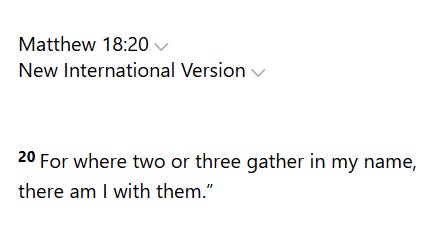
Every enduring enterprise began not with capital, but with two or three people aligned to a single purpose who decided to move before they were fully resourced. The kitchen table has launched more durable institutions than any venture fund ever has.
Scale is not your blocker; execution is your blocker.
And execution does not require a billion users, nor a burn rate, nor a pitch deck. It requires alignment to a cause which transcends the buying power of money.
It requires two people, preferably more, who are willing to bind themselves to a shared aim and accept responsibility for the next smallest viable step. When someone asks, “Does it scale?” what they are often revealing is not strategic concern, but reluctance to begin, often rooted in a fear of failure that’s projected upon others; it is easier to debate hypothetical scale than to risk measurable action.
If you cannot coordinate two people around a clear objective, scale will not save you.
But if you can coordinate five to seven people in trust, discipline, and shared work, scale will come looking for you. The way you go big is by going small, and the way you go small is by sitting down at the kitchen table, looking one another in the eye, and deciding that excuses are more expensive than effort.
Execution is available today. Alignment is available today. Trust is available today. Scale is what happens later, if you’ve earned it.


